https://www.bestcpmnetwork.com/wm8r0f4h?key=71e22323cafc6f23c987737c78d66ca2 Dan's Gardening and Birding Blog

Friday, October 16, 2015

Fall Foliage/Garden Clean Up

Welcome back.  It's been some time since my last post.  We've been busy enjoying the fall colors with weekend trips to the Adirondacks and the Finger Lakes.  For those of you not familiar with New York state, these are both well known and beautiful regions of the state.

This post will include a few fall foliage photos from the Finger Lakes trip this past weekend plus some shots from my yard.  The trip to the Adirondacks in September was well before peak foliage.  I will also touch on fall garden clean up, and talk about some hardy vegetables that still remain.

To start, I captured this photo this evening in my backyard.  The geese are migrating and I caught them at sunset, as their honking pierced the quite evening.


Geese Flying at Sunset


Next, some photos from our trip to the Finger Lakes over Columbus Day weekend.  We have come to love the area with its many wineries and beautiful vistas.


Vineyard Overlooking Keuka Lake

Seneca Lake

Vineyard Overlooking Seneca Lake


Next, a few shots from my yard in central New York state:


As the gardening season winds down, I have gradually been cleaning out a growing season's worth of vegetable plants, and unfortunately, also weeds.  As hard as I try to keep the gardens in good shape during the season, by this time of the year the weeds can start to take over,  This year I actually started the cleanup process in September.


Lower Garden Empty and Rototilled


Only a Few Lupines (Perennial) Remain of the Wildflowers


The Upper Garden - Partially Emptied


The Remaining Wildflowers Before Pulling

One of the cold hardy veggies still in the garden are the leeks.  They are a long season vegetable that are just maturing now.  They can withstand frost and their flavor is actually enhanced by the cold.


Leeks Ready For Harvest (American Flag)

Kale is another cold tolerant plant.  It can withstand frost and be enjoyed late into the fall season.


Italian Kale

Swiss chard is yet another vegetable that holds up extremely well in cold weather.


Swiss Chard


Even some plants that are not cold tolerant have survived into mid October which is unusual.  Shown below is the still thriving lettuce, scallion, and pepper plants.


 Lettuce and Scallions Still Remain


October Peppers

Blog Approved By The Ducks

Thanks as always for reading my blog.  Coming next time, I will write about Project Feeder Watch   (http://feederwatch.org/),  This is a huge citizen science project that begins on November 8th.  I have participated in this study for several years.  From the website:

Project FeederWatch is a winter-long survey of birds that visit feeders at backyards, nature centers, community areas, and other locales in North America. FeederWatchers periodically count the birds they see at their feeders from November through early April and send their counts to Project FeederWatch. FeederWatch data help scientists track broadscale movements of winter bird populations and long-term trends in bird distribution and abundance.


More to come.. Until next time.


Tuesday, September 15, 2015

It's Potato Time/Help Me Identify a Mystery Bird

Welcome back.

A few weeks ago I undertook the process of digging potatoes.  It's a fun activity, well at least I (and probably my fellow gardeners) think it is.  It's like hunting for buried treasure.  Some years the find is excellent, others not so much.

Last year I had a bumper crop of about 250 lbs, which will be hard to beat.  That was an all time record.   This year I planted fewer hills, plus the exceedingly wet June and first half of July seemed to affect the overall yield.

I tried a new variety of potato this year, along with some tired and true ones.  The new variety turned out to be quite the surprise,

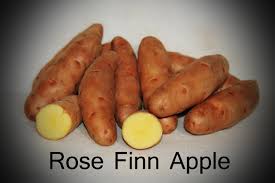
The seed potatoes I purchased were supposed to be Rose Finn Apple fingerlings, as can bee seen in my post on May 21, 2015 (http://dansgardening.blogspot.com/2015/05/planting-potatoes.html).  However based upon the appearance and some research I did, the variety turned out to be Red Thumb fingerlings. Both have rose colored skin, however Rose Finn apple has a yellow flesh, while Red thumb has a rose and white colored flesh.

At the time of harvest, I didn't take a photo of the flesh of these tubers, however below I have added one. Compare to the photo of Rose Finn Apple fingerlings.  Clearly, they were mislabeled,  They turned out to have delicious flavor, so I was pleasantly surprised.


Red Thumb Fingerlings 


Red Thumb


Potatoes should be dug when the vines start to die off.  This usually happens in August or September, depending on the variety.  If the vines are still thriving, the tubers are still growing.  Of course, if you get anxious for some early potatoes, they can be dug as "new potatoes" before they reach maturity.


Russet Burbank Potatoes

Once dug, potatoes need to be allowed to dry for at least a day before storing.  However, if exposed to light, they will turn green,  I typically lay them out on my garage floor on newspaper and cover them with a sheet or blanket.  The newspaper helps to absorb moisture from the soil still on the potatoes.


Russet Burbank Potatoes Drying

Once dry, they need to be stored in a cool, dry, dark place.  If you have an older home, the cellar may be an excellent place.  In my home, we have an old stone foundation.  The basement acts as a root cellar, since the temperature usually stays in the forties during the winter.  It never freezes since the furnace is down there, but stays cool which is great for potato storage.  It is pretty dark also, however I always cover them with an old blanket to ensure they are not exposed to light.


Yukon Gold
.


Red Thumb and Yukon Gold

In summary, the potato yield was fair this year.  Although I ended up with approximately 75 to 100 pounds, there was a higher percentage of small potatoes this year.  Nonetheless, the yield was plenty for our needs.


Finally, during the last several weeks, we have seen the bird below, but I'm not sure of the species.  It is migration time here in central New York State, so it very well could be a migratory bird.  It looks like a juvenile, which may be throwing me off track.  It almost looks like a gray flycatcher, but they are not found in the East as far as I know.  Any guesses?  Let me know.

As always, thanks for reading my blog.


Saturday, August 29, 2015

Harvest Photos - Heirloom Tomatoes and More

Welcome back.  It's been a while since my last post, as the summer is flying by and coming to a close. Labor Day is right around the corner.

This is the time of the gardening season when all the work pays off.  Overall it's been a good growing season, with a few exceptions.   The extremely wet month of June and early July had an adverse affect on some of the plants, mainly pumpkins and beans.  Some of the pumpkin plants rotted while the remaining ones didn't grow at the normal pace.  The bean plants din't grow well either, only getting about 6 or 8 inches high (normally at least 12 to 14 inches).  The bean crop was very sparse.  The pumpkins have recovered somewhat but there are only a few forming and they are only about half grown at this point.

However, the garden overall has also yielded many nice crops as I discussed in my last post on August 7, 2015 (http://dansgardening.blogspot.com/2015/08/harvest-time-is-heremid-season-garden.html).  We have continued to enjoy the many edible benefits of gardening over the last few weeks:


Abundant Harvest 


Italian Kale


Portugal Hot Peppers


Grape Tomatoes on the Vine


Red Thumb Fingerling Potatoes


Heirloom Tomatoes


Beautiful Sunflowers


Heirlooms on the Vine

In my next post I will talk about digging and storing potatoes.  Also, the newly planted radishes, kale and lettuce are making good progress towards a fall harvest.

As always, thanks for reading.


Friday, August 7, 2015

Harvest Time is Here/Mid Season Garden Clean Up

Welcome back.

Although it's hard to believe. August is now here and the garden is nearing it's peak.  After the very wet June and first half of July, it has finally started to dry out.  The garden is actually nearing the point where it may need watering.  I haven't watered since May, except for when I first transplanted plants or planted seeds.

As you have read in my previous posts, we have been enjoying many vegetables so far this season including lettuce, radishes, kale, peas, peppers, beans, and squash.

I finally have stated picking tomatoes.  This is always a much anticipated moment especially if you are a tomato lover. I have been picking grape tomatoes for the last several weeks.  Today I picked a few heirloom tomatoes as well that are not quite ripe but will finish ripening in the house.  The plants have been affected by blight again this year, but remain healthy enough at this point where I should be able to enjoy a decent crop.

Zucchini, Round Yellow Squash, Grape and Heirloom Tomatoes


Sample of Vegetables Picked


Grape Tomatoes On the Vine

This week I have also been doing some mid season cleanup.  In addition to a thorough weeding job, I pulled out the peas and radishes, and also some romaine lettuce plants which had bolted in the heat to about 3 feet tall.   It is always a good idea to try to keep the garden tidy as the season progresses. It's not absolutely necessary but it makes the fall cleanup process much easier.  I don't always get time, but luckily I did this week.

Another advantage to the clean up is creating space to plant some late season/fall crops.  Over the next few weeks I will plant some lettuce/greens to enjoy in September.   As the days get cooler, lettuce/greens will thrive much like do at the beginning of the growing season.


Cleaning Up the Peas


Portugal Peppers (Hot)


Sunflower Delight


Rainbow's End

In my next post I will talk about harvesting some onions and planting some fall crops.  As always, thanks for reading my blog.


Saturday, July 18, 2015

Killdeer Sighting/Planting Perennial Flowers

Welcome back.  thanks as always for reading my blog.

The wet summer pattern continues.  In the last six weeks (since June 1st), we have received 12 inches of rain here in central New York State.  It's hard to believe that I was watering the garden on a regular basis in May when I was first starting seeds and plants.

Finally, as promised, a couple of photos of Killdeer that I spotted on the lawn a few weeks ago.  These are interesting birds, a member of the plover family.  They are known for there signature run-stop, run-stop behavior as they try to stir up bugs to eat as they run.  The day I took these photos there were 3 of them on the lawn.  These birds nest on the ground.


Killdeer On The Run


Killdeer With It's Distinctive Markings


Last summer in my post on July 25, 2014 (https://www.blogger.com/blogger.g?blogID=7818050104445836783#editor/target=post;postID=5498612957775284819;onPublishedMenu=allposts;onClosedMenu=allposts;postNum=35;src=link), I discussed how I transformed an area in our yard where once a tall blue spruce stood into a perennial bed.  As promised, I will share photos of how the bed has progressed over the last year.

Over the winter, 3 or 4 of the perennials didn't survive, which sometimes happens especially during the first winter the plants have to endure the cold.  Of course last winter was especially brutal, so I'm surprised that most of the flowers survived.  Like vegetable gardening, maintaining a flower bed is also continuous work.  But once established, they provide much enjoyment.

I recently also added a few more perennial flowers and a dwarf blue spruce tree.  The finishing touch is adding mulch, as I used dark brown this.  We switched to dark brown mulch in all the beds this year.  We previously used the naturally color, but think the dark brown looks better.


Dwarf Alberta Spruce Will Become the Centerpiece


Phlox, Coneflowers, Coreopsis


Purple Salvia

Shifting to the front of our home, I recently removed a 25 plus year old holly bush that had died a couple of years ago over the winter.  It showed some signs of life, so I gave it some time to see if it would grow back.  However, the progress was extremely slow, so I decided to remove it.

This wasn't an easy core as I ended up using my old garden tractor to pull it out with a chain.  After multiple tugs, along with some chopping of the roots, it finally gave in!


Pulling Out The Holly Bush

Having a fairly large space to fill, we decided to plant a Japanese Maple tree as the centerpiece, adding more perennial flowers around the tree. 


Japanese Maple, Phlox, Daisies


Coneflowers


Coreopsis


In my next post, a vegetable garden update. 

Saturday, July 4, 2015

Simply Photos - Garden Update and Happy 4th of July

Welcome back.  Time is flying by as summer is officially underway and today is already the 4th of July.  It seems like just a few weeks ago the snow had melted and I was preparing the garden for the season.

June ended up being one of the wettest on record hear in the Northeast.  I recorded 7.5 inches of rain in my yard for the month, while other nearby areas in central New York state received up to 12 inches.

This week I will post just photos to bring you up to date on my garden progress.  Despite the wet conditions, most everything seems to be doing quite well.  To date we have been enjoying radishes, loose leaf and romaine lettuce, kale, scallions, and snap peas.

Enjoy the photos.


Oregon Sugar Pod II Peas - Bumper Crop


Fresh Snow Peas


Thriving Pea Plants


Loose Leaf Lettuce Blend and Romaine Hearts

Radish Blend (Park Seed Beauty Blend)


Potatoes

Using Straw as Mulch

Kale (Dwarf Blue Scottish Curly), Romaine Lettuce, Tomatoes

Thank you for visiting my blob, and happy 4th of July.

In my next post, a Killdeer sighting in my yard.