https://www.bestcpmnetwork.com/wm8r0f4h?key=71e22323cafc6f23c987737c78d66ca2 Dan's Gardening and Birding Blog

Saturday, January 24, 2015

Talking Heirloom Vegetables/Tomatoes and Otherwise

Welcome back.  I hope you continue to enjoy reading my blog.

For this post I will be taking a closer look at heirloom vegetables.  Heirlooms have become very popular over the last ten years or so.  I have been enjoying growing the heirloom varieties, especially tomatoes. But what exactly is an heirloom vegetable and why are they so popular?


According to most sources, an heirloom is an old, open-pollinated variety that is of high quality and easy to grow.  As far as how old, some authorities say those vegetables introduced before 1951 qualify as heirlooms, 1951 being the first year hybrid vegetables were developed.  Some gardeners prefer even older varieties, as some heirlooms have been passed down for hundreds and even thousands of years.

Open pollinated means that seeds from the vegetable can be grown and will come back exactly the same as the parent plant.  A vegetable can only be called an heirloom after proving it remains true year after year.  On the other hand, the same is not true for hybrid plants.  Therefore seeds from heirlooms can be saved and passed down from generation to generation.

But why are heirlooms so popular?  One of the reasons I think is the nostalgic factor.  Growing varieties that your parents and/or grandparents grew certainly has an appeal.  I enjoy growing vegetable varieties that I remember my parents and grandparents talking about.  


The main reason though is the flavor.  These old varieties have the true flavor that vegetables should have.  The more modern hybrids sometime lack in flavor and studies have shown that in many cases they are also less nutritious.

Hybrid varieties were developed over the years to produce more consistent looking, disease resistant, and higher yielding vegetables, which provide a much better mass appeal in grocery stores ,etc.  These are much easier to grow in large quantities with consistent results.

Another advantage to growing heirloom vegetables lies in the ripening process.  Hybrids are bred to ripen uniformly, thereby making it much easier to commercially harvest them all at one time.  On the other hand, heirlooms tend to ripen more unevenly, which can be advantageous for the home gardener.


With the information I have provided, you should be able to decided whether or not you want to grow heirlooms.  I highly recommend it, however I also grow some hybrid varieties as well.  They both have their advantages,  As far as where to purchase heirloom seeds, I will now provide some information on that topic.

Where To Purchase Heirloom Seeds

At one time heirloom seeds were hard to find, except for online or in seed catalogs.  As their popularity increased, so did the availability of the seeds.  They can now be found in most stores that sell seeds and even as plants.

In my post on December 31, 2014 (http://dansgardening.blogspot.com/2014/12/happy-new-yeara-first-look-at-2015-seed.html), I shared quite a few seed catalogs that I have already received.  These all are good sources of heirloom seeds.

Heirloom Vegetable Varieties

With the every increasing availability of heirlooms available, it can be overwhelming to sort through the many varieties in search of ones that you may want to try.

Below is a guide I found at http://ecosalon.com/know-your-heirloom-varieties-a-guide-to-the-seasons-best-heirloom-fruits-and-vegetables/ which may help clear some of the confusion and give you food for thought:


Tomatoes: The tomato is perhaps the poster fruit for heirlooms.  You can thank the flavorless, mealy tomatoes that dominate the market for sending our pallets towards juicy, sweet and tangy heirlooms. They’re everywhere now, even your local supermarket.  Look for these heirloom varieties: Brandywines,  Cherokee Purple, Green Zebra, Black Prince, Marvel Stripe and Flamme Orange.

Beans: Summer is full of bean varieties that bring so much nutrition and flavor to your plate. There are an incredible variety of heirloom beans as well.  In fact, the Blue Coco variety is one of the oldest known heirloom beans available.  It’s a pole bean, also known as Purple Pod and Blue Podded Pole.  Keep an eye out for others, including the Brown Lazy Wife pole bean, the butter bean variety Beurre de Rocquencourt Bean, the Hickman Snap Bean, and look also for fresh varieties of hardier beans like the Light Brown Zebra Bean, a variety of the pinto and Black Turtle beans.

Peppers: Sweet or spicy, peppers are crunchy, full of flavor and vitamins, and make any dish better. Check now for some of these sweet heirlooms:  the Sweet California Wonder, Jimmy Nardello’s, Napoleon Sweets; and these spicy varieties:  Anaheim chiles, Caribbean red, Cubanelle, Fresno Chiles, and the Purple Tiger.

Melons: Nothing says summer like juicy melon all over your face.  No more should you eat watermelon that tastes as dry as cardboard!  Give some of these delightful heirlooms a try: Canary yellow, Crenshaw, Iroquois,  Sakatas sweet and the Petit Gris De Rennes.

Cucumbers: Like their sweet melon cousins, cucumbers come in a tasty variety that make summer truly special.  Try as many as you can as often as you can!  The Lemon Cucumber may be my all time favorite heirloom summer treat. Others include: Arkansas Little Leaf, Crystal Apple, Lebanese Mirella, Tendergreens and Suyo Longs.

Finally, another nice sunrise at my home on Friday 1/22/15:


Until next time.


Friday, January 16, 2015

Organizing Vegetable Seeds/2015 Garden Planning

Once again welcome back to my blog.

I hope you are enjoying bird watching this winter as well as looking ahead to warmer weather and another gardening season.

As the bitter cold weather continues, it may be hard to shift your focus to gardening.  However, it is a good time to start thinking about which vegetables you may want to plant this year and how to plan for a successful garden.

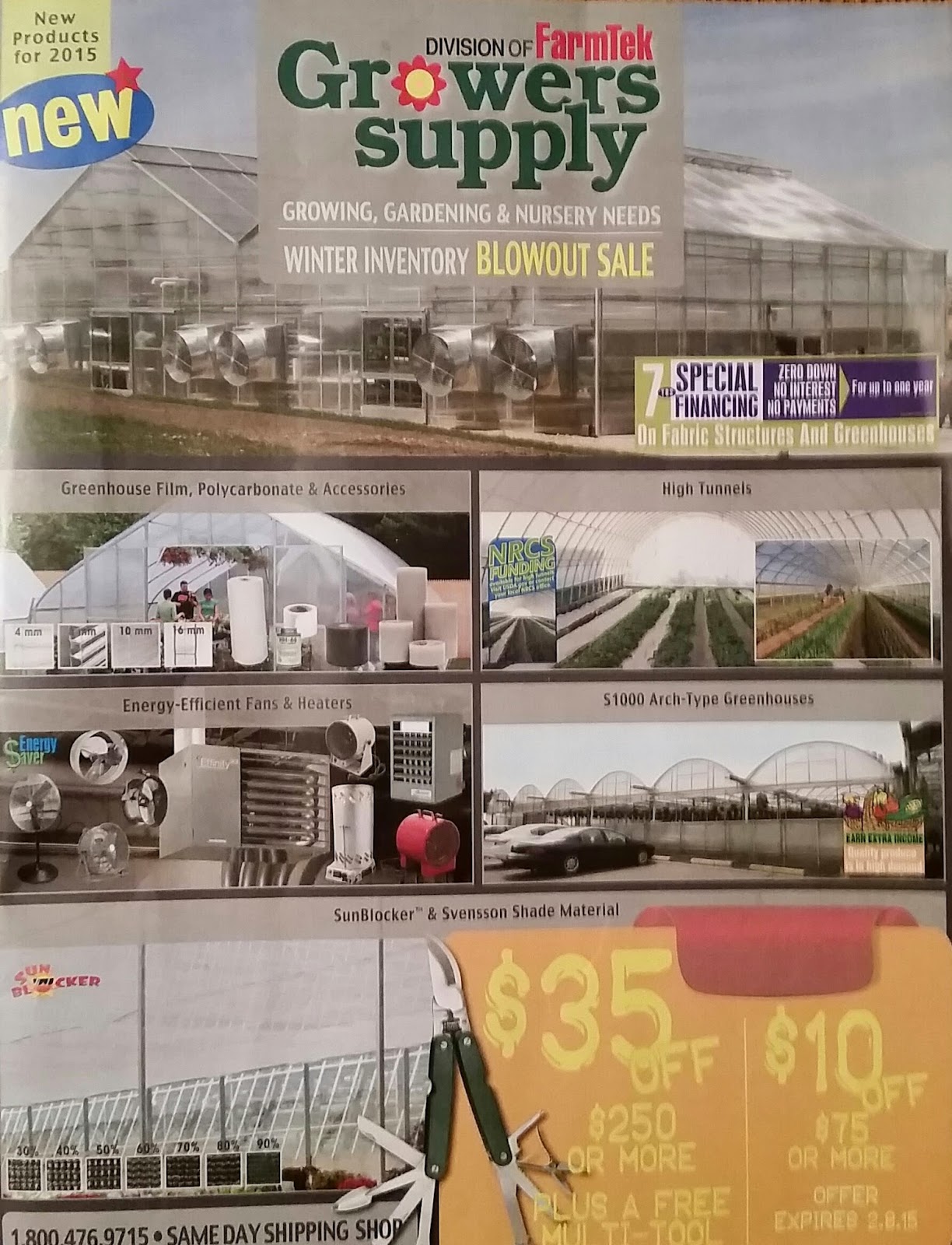
A few weeks ago I wrote a post about the 2015 seed catalogs that I have received (http://dansgardening.blogspot.com/2014/12/happy-new-yeara-first-look-at-2015-seed.html).  Since then I have received another one plus a garden supply catalog:


Also, seeds and seed starting supplies are starting to appear in the stores.  To be honest I purchase most seeds locally since I find them less expensive, however for certain varieties such as heirloom tomatoes, I do use the catalogs.

The first step is to decide which seeds from previous years are still viable.  If you are a first time gardener, you won't have to worry about this step.  My general rule of thumb is to throw away seeds more than a year old.  In other words, this year I will keep seeds dated 2014 and newer. Some seeds will keep beyond a year, but I like to play it safe since so much time and effort goes into the gardening process.  Minimizing re-planting will make your gardening experience much better and your garden more productive.

It is also helpful to organize your seeds into groupings, for example lettuces/greens, tomatoes, cucumbers, squashes, pumpkins, etc.  Rubber bands work well for this purpose and it helps to keep your seed box a lot neater.


Below is a video from the Jung Seed Co. that will benefit new and experienced gardeners alike.  It has many tips regarding improving the soil, maximizing garden yield, controlling weeds and pests, succession planting, starting plants early indoors, and using a great garden planning tool (http://gardenplanner.jungseed.com/).  It will get you thinking about the growing season coming up:


If you are a first time gardener, I would suggest starting small so you won't get overwhelmed.  I started small myself, and gradually increased my garden sizes over the years.  I am now at the point where I might start to decrease my gardening effort since my children are grown and we don't need as many veggies as we once did.

In future posts I will discuss starting seeds indoors and also winter sowing, a technique used to start seeds outside in the dead of winter.

Stay tuned and thanks for reading.


Thursday, January 8, 2015

Can Bird Watching Benefit Your Health?

Welcome back and once again  Happy New Year.

This week the weather has turned brutally cold, which should bring even a larger number of birds to the feeders in search of food.  As I write this post, the wind chill is currently closing in on minus 20 degrees Fahrenheit.  I wonder how any living thing can survive in these conditions.


American Tree Sparrows 

I have noticed for years that bird watching is very relaxing and enjoyable for me.  It helps to take my mind off of my normal daily routine and to think about something different,  This in turn helps to keep me more focused for my work.  Gardening also has many benefits, which I will cover at some point during the upcoming growing season.


So in what ways is bird watching beneficial?  I thought I would do a little research on the topic. There are many sources of information that I found, below I will summarize a couple of them.

According to Alive, an online health publication (http://www.alive.com/articles/view/23905/birding), bird watching has many benefits including:

  • Even though bird watching can be done from the comfort of your home, sooner or later it will lure you outside to observe them in their natural habitat.  Birding can be an active outdoor pursuit, taking you to all different types of terrain, rural and urban, in all sorts of weather.  It will involve walking and maybe even biking, hiking, or canoeing.  It can even bring you the thrill of feeding a bird from your hand, which I have done quite a few times.
  • Birding is most often a casual activity, but can also be taken seriously if you chose,  The beauty is you can chose your level of pursuit.  It can be very challenging, with many new learning opportunities.  As I have posted here in my blog, there are various online research projects that you can participate in involving bird watching,  including Project Feederwatch (http://feederwatch.org/) and the Great Outdoor Bird Count (http://gbbc.birdcount.org/).
  • It is a great family activity, one that children will love and will help everyone involved to have quality time together and prove to be very educational as well.


  • As mentioned above, birding will eventually get you out side.  The benefits of just being outside are many, including elevating mood, Vitamin D production, and alleviating anxiety and depression.
  • Bird watching will help you build a strong network of friends, which has been proven to help you stay healthy and happy.
  • Birding involves many opportunities for new learning experiences which is known to help fight back against diseases such as Alzheimer's.  

Bird watching is also a great activity for the cold winter months if you don't like to go outside or can't for health reasons, etc.  It is a great activity for the elderly and can be beneficial for them.  It can be an enjoyable activity during the long winter months especially for someone who is house bound.

Birding and gardening also compliment each other very well as there are many flowers, shrubs, trees, etc. that can be planted to attract birds and help them to flourish in your yard.

So dust off the binoculars, put up a feeder, and enjoy.  I know you'll become interested and eventually birding can become a great hobby for you and family. 


White-Breasted Nuthatch & Black-Capped Chickadee


Next week, I will turn my focus back to gardening as I sort through my seeds to see what I have that's not outdated and what I need to buy for the upcoming season.

Until next time, and thanks for reading.


Wednesday, December 31, 2014

Happy New Year/A First Look at the 2015 Seed Catalogs

Welcome back and thanks again for reading and following my blog during the past year.  Yes, it's been almost a year since I started posting!  I have enjoyed working on and sharing my blog and hope to continue into the future.

It's hard to believe, but 2014 is coming to a close as I write this post.  I want to wish everyone a happy and healthy New Year, and to share with you some of the seed catalogs I have received.

First, a nice photo I took today:


Dark-Eyed Junco

As the winter weather settles in, it is the time of the year for seed catalogs!  I have received quite a few already, and have started looking through them in preparation for the upcoming season.  Below are the ones I have received to date.  Most of the catalogs are familiar, however I have received a few different ones this year, notably R. H. Shumway's and Totally Tomatoes.  In the coming weeks, I will be posting about the yearly process of deciding what to grow in the garden.


Until next time.  Happy New Year!


Sunday, December 21, 2014

Happy Holidays/Enjoy the Bird Photos

Welcome back.  My last three posts have provided you with ample information regarding the choice of bird feeders, bird food, and feeder location.  Hopefully you've had a chance to set up a bird feeder(s) in your yard and are enjoying the wonderful hobby of bird watching.


Red-Bellied Woodpecker


With the holidays upon us and knowing how busy we all are, I decided to take a break and post just photos this week.  So sit back, relax, grab the binoculars, and enjoy.


American Tree Sparrow/Northern Cardinal


White-Breasted Nuthatch


American Goldfinches


European Starlings


House Finch


Until next time.


Thursday, December 11, 2014

Bird Feeder Placement

Welcome back, I hope your bird feeding/watching season is well underway.

First, enjoy a nice photo of a blue jay at my feeder last weekend:


In my last two previous posts, I covered the different types of bird feeders (http://dansgardening.blogspot.com/2014/11/exploring-different-types-of-bird.html) and bird food (http://dansgardening.blogspot.com/2014/12/what-to-feed-birdsmore-bird-photos.html.)

Now that I have given you information on the different types of feeders and bird foods, you may be wondering what feeder location(s) would be best to attract birds to your yard.

The first thing to do is to establish an area in your yard that you want to become a focus zone for watching birds.  It is best to choose this area based on a place inside your home from which you want to primarily watch the birds.  You will want to pick an area that has good visibility from inside your home.

Once you have determined an area in your yard, the key is to locate the feeder(s) to ensure the highest possible level of safety for the birds.

One of the biggest dangers to birds is windows. It’s hard to believe, but millions of birds are killed each year by striking windows.

Bird deaths from striking windows can be reduced by placing feeders within 3 feet or more than 30 feet from your windows. When feeders are less than 3 feet from your window, the birds cannot gain enough momentum when taking off from the feeder to harm them if they were to collide with your window.   A distance of more than 30 feet should allow them enough room to change their flight path to avoid a window.

Another danger to bird is cats.  The effects of cats and other predators can be reduced by placing feeders where there is cover within 10 feet or so.  Birds often will take seed from a feeder, then retreat to a shrub or tree to eat.  Birds love to hide in shrubbery, and they do so for good reason.  In the northeast, evergreen shrubs work the best since they provide protection even in the winter months.    

Providing a water source will also attract birds.  Of course, in this area of the country it will require a heater to prevent it from freezing.  Birds will usually be able to find other sources of water, such as dripping icicles.


When considering the proper height of your feeder, a good rule of thumb is hanging or pole mounting the feeder 5 to 8 feet off the ground.  Hanging in a tree or grape vine also works, but these locations will be more susceptible to squirrels.

Squirrels can prevent a huge challenge,  It is very difficult to keep them from your feeder,  Placing a baffle above or below the feeder may help (see photos below).  Some feeders now have weight activated perches that prevent seed from dispensing when a squirrel is sitting on the perch.  You can even purchase a hot pepper mixture to mix with the bird seed.  Supposedly this will deter the squirrels, however, based on personal experience, this doesn't work too well.


Finally, a nice sunrise photo from our home last week.


Until next time.


Wednesday, December 3, 2014

What to Feed the Birds/More Bird Photos

Welcome back to all of my readers.

First, a couple of recent photos.  The first photo was captured by my son:


Male/Female Northern Cardinal Rare Joint Appearance 


Dark-Eyed Junco Braving The Thanksgiving Eve Storm 


In my last post on November 24, 2014 (http://dansgardening.blogspot.com/2014/11/exploring-different-types-of-bird.html), I described in detail the the most common types of bird feeders that are available, and which may be the best to use in your area and for your particular yard, etc.  Feeding and watching birds is very enjoyable and a great family activity.


This week I will try to decipher the many types of bird food available, and which are best for your area and particular birds that may be visiting your feeders.

I think the easiest way to approach this is to breakdown the individual ingredients of most bird food mixes.

Black-Oil Sunflower Seeds

The most common and arguably the most desired by many birds in North America are black-oil sunflower seeds.  These seeds are high in energy and are preferred by cardinals, chickadees, finches and sparrows.  The better (thus more expensive) blends of bird food normally have a higher concentration of these seeds.


Cracked Corn

This is a very common ingredient in bird food blends and is enjoyed by doves and sparrows.


Milo

This small round grain is one of the main ingredients in inexpensive seed mixes.  This seed is not a favorite of most Eastern birds, so it is best to avoid mixes with a high concentration of milo.


Millet

Millet is another small round grain also very common in bird seed blends,  It is somewhat more desired then milo, especially by ground foraging birds (juncos, sparrows, etc).


Nyger

Nyger seed is also referred to as thistle seed, although it does not come from the thistle plant.  This seed is imported from Africa and is a favorite mostly since it is loved by finches including the American Goldfinch, Common Redpoll, and Pine Siskin,  A specific type of feeder is required to dispense this seed (tube feeder with small ports or a sock feeder).


Hulled Sunflower Seeds

These are simply sunflower seeds without the shell and will reduce the waste under your feeder if that is a concern.  It also provides a no-work food for birds.


Safflower Seeds


Safflower seeds look like white sunflower seeds.  These are enjoyed by cardinals and normally found in the more expensive blends.  In most cases sunflower seeds will work just as well.


Peanuts

Birds in general love peanuts.  These can be fed in the shell or shelled.  Larger birds will carry off the whole peanuts, while smaller birds will prefer the shelled variety.  It is best to avoid salted peanuts or those with any coating or flavorings.


Suet

Most birds will enjoy suet, which is available in many varieties,  Raw suet can be purchased in the meat department of most grocery stores.  This can be feed by hanging outside in a mesh bag such as those in which onions are sold.  Processed suet cakes are readily available with many added goodies that birds love such as sunflower seeds, fruit, nuts, and more.  These cakes fit nicely into the wire cage suet feeders described in my last post.  When I first starting feeding and watching birds when I was 10 or 12 years old, I even made my own suet cakes by heating the raw suet and pouring it into molds with sunflower seeds. Even though it made a mess in my Mom's kitchen, I guess I was ahead of my time.    


Beef Suet


Suet Cake


So enjoy feeding and watching the birds.  Until next time.