https://www.bestcpmnetwork.com/wm8r0f4h?key=71e22323cafc6f23c987737c78d66ca2 Dan's Gardening and Birding Blog

Thursday, February 11, 2016

The Great Backyard Bird Count Starts Tomorrow/Winter Sowing

Welcome back.  Time is flying by as always and we find ourselves just a day away from the start of the Great Backyard Bird Count (GBBC).

Winter is finally settling in as this weekend will bring the coldest air since last February.  So far, this winter has brought only brief cold snaps, unlike last winter's long lasting brutal cold.

Later in this post, I will discuss winter sowing,  For those of you unfamiliar to this technique, certain vegetables can be sowed outside now in the cold and they will sprout in the Spring!  Don't believe me? See below for more details.

First, a couple of recent bird photos for your enjoyment:


House Sparrows


Northern Cardinal and House sparrow


I recently posted information about the GBBC in my post on January 29, 2016.


Below is some simple steps to follow in order to participate:


Are You Ready?

If you have not participated in the GBBC since before the 2013 merger with eBird, create a free account to enter your data.  Save your username and password in a safe place.

Can't remember your username or password? look for the links on the sign-in page (under the blue button) to re-set your username or password.

Have questions about how to count the birds you see? Please print and review the GBBC Downloadable instructions.

If you want to enter your GBBC observations from the field, download the free eBird Mobile app for either IOS or Android devices.


So sign up today, sharpen your pencils and dust off the binoculars.  And remember, this is a great family activity.


To show just how popular this project is, below is some stats from last year's count:

Top 10 countries by checklists submitted
CountryNumber of SpeciesNumber of Checklists
United States671108,396
Canada24110,491
India7176,810
Australia524812
Mexico653425
Costa Rica559303
Portugal197193
New Zealand126161
Ecuador784138
Honduras353133


Can I Plant Seeds Outdoors Now?  In The Cold?  Really?  The Answer Is Yes!

Believe it or not, it is possible to plant seeds in containers now, place outdoors in the snow, and they will germinate in the Spring.  The technique is called winter sowing.

The best results will be with cold hardy, short season vegetables such as kale, lettuce, spinach, onions, leeks, radishes, and Brussels sprouts.  Tomatoes and peppers will also germinate, but will be delayed compared to those started indoors and will mature much later.  The nice thing is that seeds sown this way require absolutely no care once planted until they germinate.

The technique is simple, start with a one gallon milk or water jug that is clean.  Cut the jug in half except to leave one area to act as a hinge,  Drain holes should be drilled in the bottom also.


Fill the container with a good seed starting mix or potting soil and wet thoroughly.  Potting soil actually works better since it tends to absorb and retain more moisture, whereas seed starting mix (usually just peat moss) tends to dry out very quickly.

The excess water will drain via the drain holes.  Never use your garden soil for starting plants, since the microorganisms (bacteria, fungus, mold) can hamper the germination process and even kill seedlings.

Plant the seeds and cover with the appropriate amount of soil as per directions on the seed packet. Water again lightly.  I use a spray bottle for this since a mist doesn't disturb the seeds during the watering process.


The final step is to seal the containers with duct tape and place outside.   That's right, place them out in the snow with caps removed.  The opening in the top will allow moisture to enter and also prevent the containers from overheating once spring arrives.


I planted Siberian Improved Dwarf kale, White Lisbon onions (scallions), Baby Romaine lettuce, and Long Island Improved Brussels sprouts.

In future posts I will follow the progress of the winter sowing.  With wind chills expected to be in the minus 30 Fahrenheit range this weekend,, the seeds won't be germinating any time soon.


Until next time.


Friday, January 29, 2016

Bird Photos/Great Backyard Bird Count is Coming!

Welcome back and as always thank you for visiting my blog.

It's hard to believe, but the Project FeederWatch season, which runs from mid-November to mid-April, is nearing the half way point.  For those of you unfamiliar with Project FeederWatch, refer to my post of November 4, 2015 (http://dansgardening.blogspot.com/2015/11/its-time-for-project-feederwatch.html).  There is still time to sign up and participate in this very worthwhile citizen science project.  I will discuss the Great Backyard Bird Count, which begins on February 12th, later in this post.

So far during this bird watching season, I have captured some nice bird photos.  I posted some of the photos in my post of January 3, 2015 (http://dansgardening.blogspot.com/2016/01/bird-photoshappy-new-year.html).  Below are some more for your enjoyment:


Northern Cardinal


Mourning Doves


Blue Jay


The Great Backyard Bird Count is Only Two Week Away!


This bird count is fun to participate in and is a great family activity.  Unlike Project FeederWatch, it only lasts for four days.   I have been participating for four or five years.  It's very simple to get started, the following is taken from the website (http://gbbc.birdcount.org).


Join Us for the Next Count, February 12-15, 2016


 It’s as easy as 1, 2, 3!

1. Register for the count or use your existing login name and password. If you have never participated in the Great Backyard Bird Count or any other Cornell Lab citizen-science project, you’ll need to create a new account. If you already created an account for last year’s GBBC, or if you’re already registered with eBird or another Cornell Lab citizen-science project, you can use your existing login information.
2. Count birds for at least 15 minutes on one or more days of the GBBC. You can count for longer than that if you wish! Count birds in as many places and on as many days as you like—one day, two days, or all four days. Submit a separate checklist for each new day, for each new location, or for the same location if you counted at a different time of day. Estimate the number of individuals of each species you saw during your count period.
3. Enter your results on the GBBC website by clicking “Submit Observations” on the home page. Or download the free eBird Mobile app to enter data on a mobile device. If you already participate in the eBird citizen-science project, please use eBird to submit your sightings during the GBBC. Your checklists will count toward the GBBC.

Until next time.  Still to come in future posts, blight resistant tomato strains, winter sowing, seed selection for 2016,  hydroponic gardening, and much more.


Friday, January 15, 2016

Try an Heirloom Hybrid Tomato/2016 Seed Catalogs

Welcome back, and as always thanks for reading.

It's that time of the year again, the new seed catalogs are arriving daily,  It reminds us of the growing season to come, even though at this point it seems so far away.

If you notice, many of the catalogs feature tomatoes on the cover.  Usually the seed companies will showcase a new variety, as an attention grabber.  It just goes to show how popular tomatoes are among gardeners.


In the past few years, I have focused mostly on heirloom tomatoes, since I have come to love the taste and beauty of these gems.  For example, I talked about heirloom tomatoes in my post on January 24, 2015 (http://dansgardening.blogspot.com/2015/01/talking-heirloom-vegetablestomatoes-and.html.

However, there are many good hybrid varieties also.  In this post, I will showcase some new hybrids along with a relatively new concept in tomatoes, heirloom hybrids.  Yes, heirloom hybrids.

So what exactly is an heirloom hybrid?  Growers have discovered that by hybridizing heirloom tomatoes, the best of two worlds can be achieved.  Since they are hybrids, they will tend to produce more uniform and numerous fruits, while being more resistant to diseases.  However, they will retain the wonderful heirloom flavor.

For a great article regarding the development of better tomato varieties, see this article from the Washington Post :  (https://www.washingtonpost.com/lifestyle/home/the-perfect-tomato-is-just-around-the-corner/2015/09/15/70909c22-57d4-11e5-b8c9-944725fcd3b9_story.html),


First from Burpee (www.burpee.com), the Madame Marmande hybrid, which is an heirloom hybrid:


Madame Marmande Hybrid -72 Days

From the Burpee catalog:

Gourmet tomato with a French accent. Juicy. Succulent. Extraordinaire! A culinary star in France, where a favorite instant feast is a scooped-out Marmande brimming with a mild cheese. Hefty, broad-shouldered, scarlet and light-ruby,  Madame Marmande’s 10 oz. fruits are loaded with rich flavor. Fruits won’t crack like other Marmande varieties. Indeterminate.
--------------------------------------------------------------------------------------------------------------------------


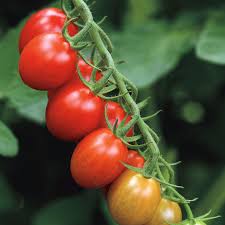
From Park Seed (www.parkseed.com), the Sugar Rush hybrid, a new grape variety:


Sugar Rush Hybrid -53 days 

From the Park Seed catalog:


Though classified as a grape tomato, Sugar Rush actually looks like a cherry and grape combination, with plump, rounded fruit in long, elegant trusses all over very vigorous plants.  It is indeterminate, so it keeps going all season long, but the plant is more stocky than vining, reaching 5 to 7 feet high and perhaps 3 to 4 feet wide. You will be astonished at its productivity over a long summer!


--------------------------------------------------------------------------------------------------------------------------


From Burgess Seed (www.eburgess.com), the Amish Paste heirloom tomato:          


 From the Burgess catalog:

The ultimate paste tomato with world class flavor! A large, meaty, great tasting paste tomato. Long, pear shaped paste variety, produces 10 oz. red fruits on a vigorous indeterminate plant. One of the few paste tomatoes that also tastes great fresh. Excellent for use in canning, pastes, or sauces.


--------------------------------------------------------------------------------------------------------------------------


From Johnny's Selected Seeds(www.johnnyseeds.com), the Cherry Bomb cherry tomato:


Cherry Bomb Hybrid - 64 Days

From the Johnny's catalog:

Cherry Bomb is perfect for the organic grower who needs strong late blight protection. Vigorous plants produce high yields of uniform, vivid red fruits with ideal cherry size (15-20 gm.) for harvest and snacking. Classic cherry tomato flavor - firm, sweet, and well-balanced. Unique calyx makes an attractive display when left attached to fruit. High resistance to late blight. Indeterminate.
--------------------------------------------------------------------------------------------------------------------------


Finally, from Jung Seed (www.jungseed.com), the Cherokee Carbon heirloom hybrid.  This is another example of the new heirloom hybrids:


Cherokee Carbon Heirloom Hybrid - 76 Days

From the Jung catalog:


Large, 10 to 12 ounce beefsteak-type fruits deliver a rich, robust flavor perfect for sandwiches, salsa, sauces and more. A cross of Cherokee Purple and Carbon.

Thanks for reading my blog.  In future posts, I will research blight resistant tomato varieties.


Sunday, January 3, 2016

Bird Photos/Happy New Year!

Welcome back.  I hope everyone had a great Holiday Season.  After a warm December and Christmas, the weather is finally coming back into the normal range for this time of the year.  The colder temperatures and light snow have also brought back the birds in larger numbers.

After a busy year of working on my blog, this week I will take a break and just let you enjoy some bird photos I have recently taken.

I look forward to another busy winter of bird watching and also preparing for the upcoming growing season.  I already have received seeds catalogs in the mail.

There is much more to come in the coming weeks and months, so stay tuned.


Mourning Dove in the Snow


House Finch


Majestic Blue Jays


White-Breasted Nuthatch 


Downy Woodpecker


Dark-Eyed Junco


House Sparrow

As always, thanks for reading and Happy New Year.

Tuesday, December 15, 2015

Bird Identification Websites and Apps

Welcome back.

The unbelievably warm December weather continues.  Temperatures have been way above normal thus far this month.  Last weekend the high temperatures are forecast to be in the sixties.

I have completed 5 weeks of counting as I am participating in Project FeederWatch again this year.  So far this year, my counts have been lower than normal, both in the number of species and the total number of birds for each species.  This is of course a direct result of the above normal temperatures.

In previous posts, I have covered in detail various projects one can participate in to help aid in bird research.


House Finch


Project FeederWatch

November 4, 2015 (http://dansgardening.blogspot.com/2015/11/its-time-for-project-feederwatch.html). Project dates 11/14/15 to 4/8/16.

Christmas Bird Count

November 30, 2015 (http://dansgardening.blogspot.com/2015/11/bird-watching-season-is.html).  Project dates 12/14/15 to 1/5/16.


Great Backyard Bird Count

February 2, 2015 (http://dansgardening.blogspot.com/2015/02/almost-time-for-great-backyard-bird.html). Project dates 2/12/16 to 2/15/16.


There are even others which I may cover in the future, including eBird (http://ebird.org/content/ebird/).


Bird Identification


There are various sources available regarding bird identification, both websites and phone apps.


 First, some of the best websites:

  • Cornell Lab of Ornithology (http://www.birds.cornell.edu/Page.aspx?pid=1478#).  If you scroll down you will see a small search box underneath the heading "All About Birds".  This is a great online bird guide that I have used frequently.  An added bonus of this site is the links to various live bird webcams in  Ithaca, NY, Texas, and Ontario, Canada.


Bird Apps (Free)

  • Merlin Bird ID App (http://merlin.allaboutbirds.org/).  This is available for both IOS and Android.  Nice app with a bird ID wizard based on size, shape, etc.  


Friendly Visitor


Sunrise 12/11/15

Until next time.  As always, thanks for visiting my blog.

Monday, November 30, 2015

Bird Watching Season is Underway/Christmas Bird Count

Welcome back.  I've been busy over the last 3 or 4 weeks with fall projects around the house including final yard cleanup and getting ready for Thanksgiving.

In my last post on November 4th, 2015, I wrote in detail about Project FeederWatch (http://dansgardening.blogspot.com/2015/11/its-time-for-project-feederwatch.html).  It is a citizen science project which started on November 14th and runs though April 8th.  If you enjoy feeding and watching birds, this is a great project to participate in.   The cost is only $18 which includes a research packet and calendar.  This also makes a great holiday gift idea.

So far this season, I would say that the numbers are down, both the species and overall bird numbers. This is most likely due to the mild weather we have experienced thus far in November, and no snow cover to date.  I have seen an increase in the number of species/total bird counts over the last three weeks. Once the cold weather settles in and we get snow on the ground, the birds will be out in force.

Blue Jay at Work

For those of you looking for a different bird watching project this time of the year, there is also the Christmas Bird count. This is not only sponsored by the Cornell Lab of Ornithology, and Bird Studies Canada, but also by Audubon.  This count is different in that it usually involves travelling to a designated location (circles) near your home.  Counting is done with a group of people.  For more information visit http://www.audubon.org/conservation/science/christmas-bird-count.

From the website:

Prior to the turn of the 20th century, people engaged in a holiday tradition known as the Christmas "Side Hunt": They would choose sides and go afield with their guns; whoever brought in the biggest pile of feathered (and furred) quarry won.
Conservation was in its beginning stages in that era, and many observers and scientists were becoming concerned about declining bird populations. Beginning on Christmas Day 1900, ornithologist Frank M. Chapman, an early officer in the then nascent Audubon Society, proposed a new holiday tradition-a "Christmas Bird Census"-that would count birds during the holidays rather than hunt them.


All Christmas Bird Counts are conducted between December 14 to January 5, inclusive dates, each season. Your local count will occur on one day between those dates. Participate in as many counts as you wish!
How does participation work?
There is a specific methodology to the CBC, and all participants must make arrangements to participate in advance with the circle compiler within an established circle, but anyone can participate.
Each count takes place in an established 15-mile wide diameter circle, and is organized by a count compiler. Count volunteers follow specified routes through a designated 15-mile (24-km) diameter circle, counting every bird they see or hear all day. It's not just a species tally--all birds are counted all day, giving an indication of the total number of birds in the circle that day.  
If you are a beginning birder, you will be able to join a group that includes at least one experienced birdwatcher.
If your home is within the boundaries of a CBC circle, then you can stay at home and report the birds that visit your feeder on count day as long as you have made prior arrangement with the count compiler. Check out the sign-up link above during the sign-up season for information on how to contact the compiler.
See additional questions about CBC participation below.

Below is a video about the Christmas Bird count:


Some more of my photos from the first few weeks of Project FeederWatch:


House Sparrow

Brown Headed Cowbird

House Sparrow

Finally, a beautiful sunrise photo taken from my home last week.


November Sunrise

As always, thanks for reading.


Wednesday, November 4, 2015

It's Time For Project FeederWatch

Welcome back.

Believe it or not November is here, and that's good news for bird watchers!  This week we are seeing above normal temperatures and sunny skies.  It doesn't seem like the typical November bird watching weather for central New York State.


Project FeederWatch officially begins on November 14th, and runs through April 8th of 2016.  This is the 29th season for this citizen science project which is a joint venture of the Cornell Lab of Ornithology and Bird Studies Canada.  However, if you want to participate this year, I would encourage you to sign up soon as it takes a few weeks for you to receive your research kit.  Your starter kit also includes your membership number, which is needed to enter data online.  It only costs $18 for the season.  But not to worry,  You don't have to participate every single week during the project.

For more information and to sign up, visit http://feederwatch.org/.

I have also provided an instructional video, which has good information regarding how to set up a bird watching area and much more:


What does all this data tell us?

(From thee FeederWatch website):

When thousands of FeederWatchers in communities across North America count birds and send their tallies to the FeederWatch database, the result is a treasure trove of numbers, which FeederWatch scientists analyze to draw a picture of winter bird abundance and distribution.
FeederWatch data show which bird species visit feeders at thousands of locations across the continent every winter. The data also indicate how many individuals of each species are seen. This information can be used to measure changes in the winter ranges and abundances of bird species over time.


Why is this data important:

(From thee FeederWatch website):

With each season, FeederWatch increases in importance as a unique monitoring tool for more than 100 bird species that winter in North America.
What sets FeederWatch apart from other monitoring programs is the detailed picture that FeederWatch data provide about weekly changes in bird distribution and abundance across the United States and Canada. Importantly, FeederWatch data tell us where birds are as well as where they are not. This crucial information enables scientists to piece together the most accurate population maps.
Because FeederWatchers count the number of individuals of each species they see several times throughout the winter, FeederWatch data are extremely powerful for detecting and explaining gradual changes in the wintering ranges of many species. In short, FeederWatch data are important because they provide information about bird population biology that cannot be detected by any other available method.
So sharpen your pencils and dust off the binoculars.  It's time to count birds.

When you sign up, you will receive the following benefits from your membership:

  • Full access to the website and data entry.
  • Winter Birds Highlights, a summary of the previous counting season.
  • The Cornell's Lab newsletter, a publication about backyard birds.

New participants will receive:

  • Common Feeder Birds poster.
  • FeederWatch handbook and instructions booklet.
  • Bird-Watching Days calendar.
  • Tally sheet.


As an added bonus, participants can submit their photos to share on the website.

So join today in order to get your research kit in a few weeks.   As I mentioned many times before, bird watching is a very relaxing activity and a great way to spend quality family time together.


As always, thanks for readng.